
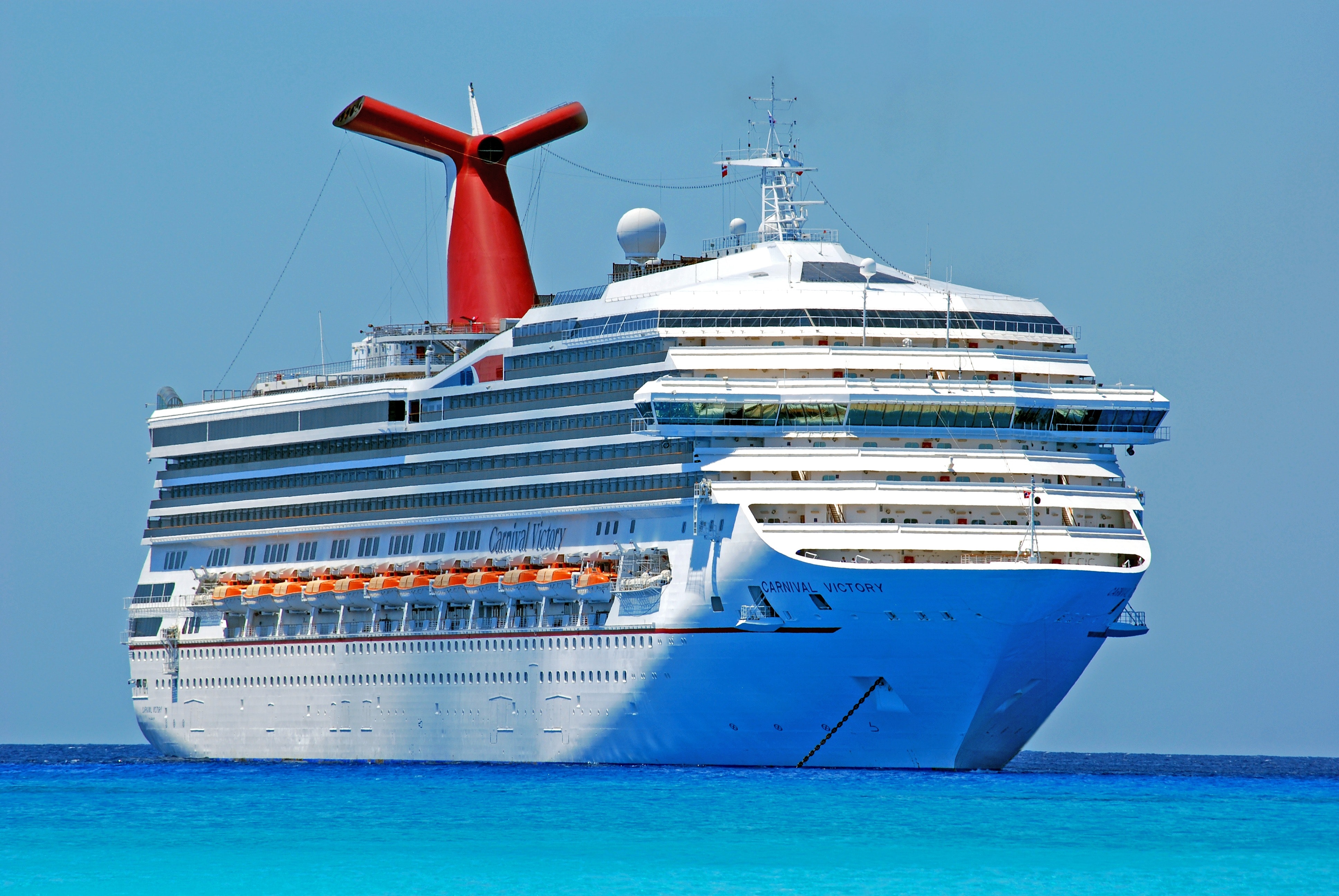
Improved Wi-Fi for Cruise Ships via 6 GHz Thanks to the FCC and Cisco

Passengers and crew aboard cruise ships will soon be enjoying hugely improved Wi-Fi – Thanks to some new rules passed by the FCC and Cisco. 

A while back we reported on Cisco petitioning the FCC to allow 6 GHz Wi-Fi on cruise ships. Cisco first proposed the idea to the cruise industry back in January 2024, and ever since Cisco has been working with the FCC to get the rules changed. 

And now, as of February this year, the FCC has proposed a new rule which would allow 6 GHz Wi-Fi to be deployed and operated on cruise ships. 

This is great news for cruise passengers (as well as the crew) who will no longer have to suffer with sub-par Wi-Fi services on board the boat. Cisco is saying that significant progress has been made, and our expert Wi-Fi engineers here at Geekabit are excited to see it, both personally and professionally. 

Why is Wi-Fi big business on cruise ships?

In just a year, the US cruise industry will see 26 million passengers aboard their ships. And providing them with better connectivity while they are on board will make a huge difference – All thanks to introducing 6 GHz Wi-Fi.

The cruise liners we see today are more like floating cities than cruise ships. The cruise industry generates over US$25 billion in annual revenue and provides a huge 290,000 jobs. 

With thousands of passengers and crew on board each ship, there are a lot of connectivity needs to meet. People expect excellent connectivity wherever they go, and out at sea is no exception. 

Up until now, 6 GHz Wi-Fi has not been available for ships (you can find out why here). With the FCC proposal to allow low power indoor 6 GHz Wi-Fi, this is all set to change. Users will find a significant boost in quality and speed. 

Cisco is assisting the FCC by helping to verify that this access to the 6 GHz band will not cause interference to current users, both at sea and in port. 

Cisco’s Senior Director of Connectivity & Technology Policy Bill Davenport says:

“The FCC is recognising what passengers and crew have long experienced: Onboard connectivity often falls short of modern expectations. This welcome step begins the process of updating legacy rules that constrain network performance and opens the door to faster, more reliable internet at sea.” 

Will 6 GHz Wi-Fi on cruise ships cause interference to other users?

Expert Engineer at Cisco, Matt Swartz,  believes it is highly unlikely that indoor 6 GHz cruise Wi-Fi will interfere with incumbent satellite services or microwave links. 

Why won’t 6 GHz Wi-Fi on cruise ships cause interference?

Cisco Engineer Matt Swartz says: 

“Cruise liners can have as many APs as stadiums, sometimes more. Even an installed base of 4,000 APs is not uncommon for a single ship. Fortunately, most ship deployments have now moved APs into individual cabins, which means that Wi-Fi signals are well contained within the ship’s heavy steel and reinforced glass structure. We’re now working with the cruise industry to test and verify that there’s no risk of interference with incumbent services when using 6 GHz Wi-Fi at LPI levels within the ship.”

Why is there a drive for better Wi-Fi on cruise ships?

One of the significant drivers for improved Wi-Fi on cruise ships and other vessels has been the introduction of more robust and much faster satellite backhaul services at sea. 

Yes, we’ve experienced okay in-cabin Wi-Fi using the existing 5 GHz and 2.4 GHz operations, but we expect 6 GHz to make a big difference for connectivity, speed and quality within the ship’s high traffic areas including the ship’s entertainment venues. 

Much like a stadium or other large public venue, a busy cruise ship is a high density environment with thousands of different user devices all competing for the same spectrum within a small area. 

When the FCC gives permission for Cisco to go ahead, they will be using their high-density 6 GHz expertise to boost onboard connectivity for both passengers and crew, improving quality and speed significantly. 

Cruise ship Wi-Fi not just for leisure

We’ve focused here on the improvement that passengers and crew will see in terms of internet access and communications.

But better onboard cruise ship Wi-Fi can also be used for:

  • Ship operations
  • Messaging
  • Safety procedures

We would expect a positive decision from the FCC within the year. Better Wi-Fi when out at sea? We can’t wait. 

You can find the full FCC document here

People also ask…

You may be wondering one of these frequently asked questions yourself. 

Why was the 6 GHz Band previously not allowed on ships? 

6 GHz was originally prohibited on ships in order to protect EESS remote sensing measurements across the oceans. 

EESS stands for Electrical Energy Storage System. It’s a technology that captures and stores electrical energy for later use, like a rechargeable battery. These systems are important for ensuring reliable power supply. 

You can read more about this here.

Why is 6 GHz connectivity needed on cruise ships out at sea?

Whether you are a seasoned cruise ship guest or have never cruised out on the open ocean, you might question the necessity of needing connectivity when you’re not in port. 

Any business in the hospitality industry strives for the best possible guest experience. Wi-Fi is a huge part of that, whether you’re on land or out at sea. 

Some examples of needing a reliable Wi-Fi connection on board a cruise ship are:

  • To stream movies from ship data centers 
  • Experiencing AR/VR for gaming
  • Relying on a connection for dining and retail purposes 

Allowing 6 GHz Wi-Fi whilst out at sea not only enhances the cruise experience for guests but also provides reliable connectivity to support critical ship operations.

Reliable 6 GHz connectivity for Ship operations could include:

  • Real-time access to navigational data and weather forecasts via Wi-Fi 
  • Sensors to monitor engines, ship systems, facilities, and security applications 
  • Communication between cruise ships, port authorities, crew members, and passengers

Why is Cisco so interested in cruise ship connectivity? 

You might be wondering why Cisco is bothering to petition this? Connectivity in the cruise industry actually has the potential to be big business. 

The network on a cruise ship typically consists of 4000 Access Points, supporting more than 10,000 Wi-Fi devices as well as providing connectivity for ship operations.

Cruise ships are quite literally packed with guests. Cisco sees the importance of delivering the right high density connectivity onboard sea vessels. In the US alone, the cruise industry is worth $3.7 billion. 

SpaceX Starlink to Provide Next-Generation Wi-Fi to Carnival Cruises

If you are a part of the cruising community then you might have seen via Carnival Corporation that they have signed a new agreement with Starlink – The satellite technology leader.

Even if you’re not a part of the cruising community, you will likely have heard of Carnival Corporation. They are one of the world’s largest leisure travel companies, boasting a portfolio of world-class cruise lines.

This provision of next-generation Wi-Fi on Carnival cruise ships is all set to transform connectivity for both guests and crew, bringing the ships faster internet and greater capacity. 

This new and improved Wi-Fi connectivity will start aboard the Carnival Cruise Line and AIDA Cruises brands. 

Carnival is the world’s largest cruise company, so it makes sense that they are committed to providing their guests with fast internet. Their ongoing strategy is to provide their guests with the best Wi-Fi experience at sea by tripling bandwidth fleet-wide since 2019. 

Last week, the latest move in this connectivity strategy was signing an agreement with SpaceX’s Starlink to provide next-generation internet connectivity across its global fleet. 

Starlink utilises LEO (Low Earth Orbit) satellite technology, providing faster service, greater capacity and more reliable Wi-Fi on a global scale. 

Rollout of Starlink connectivity on board cruise ships has begun

December last year saw the beginning of the Starlink rollout across their Carnival Cruise Line and AIDA Cruise fleet of ships. 

They have plans to extend Starlink connectivity to more of their world-class cruise brands such as Princess Cruises, P&O Cruises (Australia and UK), Cunard, Holland America Line, Costa Cruises and Seabourn. 

Until recently, at-sea experiences of Wi-Fi aboard cruise ships were not very comparable to on-land connectivity. By signing with Starlink, Carnival are greatly improving their on-board connectivity for guests (and crew) by offering the best available Wi-Fi experience – Rivalling even on-land connectivity. 

In an age where the majority of people expect to be able to connect whilst on holiday, this is big news. How can guests share their holiday snaps with friends and family back home if they’ve got patchy Wi-Fi? 

Guests may also find that they would like to stream movies back in their cabin via Netflix or watch specific sports matches live – Buffering is not an option. 

Starlink to provide cruise guests and crew with home-level connectivity whilst at sea

CEO of Carnival Corporation, Josh Weinstein says:

“For many of our guests, it has become more and more important to maintain the type of connectivity at sea that they’ve become accustomed to at home, and of course to share the unforgettable experiences of their cruise with friends and family.

“We are in the business of delivering happiness, and Starlink makes it as easy as possible for our guests to share all their great moments and memories, giving them even more joy out of their cruise vacation.”

Not only does this new-generation Wi-Fi bring more joy to guests, but it will also enable Carnival brands to offer new guest services and features – All through added bandwidth.

And it’s not just the guests that will be seeing the benefits of Starlink connectivity on board. The increased bandwidth will also help at an operational level with things like onboard equipment monitoring as well as real-time communications between teams on ship and on the shore. 

Whatsmore, Carnival isn’t just about bringing joy to their guests at sea but their crew too. Guests aren’t the only ones that want to stay in touch with friends and family back home whilst they’re aboard the ship – Their crew members also want to do the same. Starlink’s innovative satellite technology will enable them to do just this. 

Starlink thrilled to bring high-speed broadband to remote waters

Vice President of Sales for SpaceX Starlink, Jonathan Hofeller says:

“High-speed, low-latency broadband internet is critical in our modern age, and we’re excited to provide Carnival Cruise Line and AIDA’s guests an internet experience that makes their travel even more enjoyable.

“In even the most remote waters, guests onboard Carnival Corporation ships will be able to share real-time updates with friends and family.”

Carnival already has a portfolio of world-class communications service and technology providers for their ships – Satellite and otherwise. Starlink are the latest provider to join this growing group of pioneering tech providers. 

Carnival remains the industry leader for their connectivity, fleet wide. Their global presence sees almost 100 ships visit over 700 ports worldwide. It’s little wonder they are innovative in their attitude to connectivity, using a multi-provider approach with a framework strategically designed to optimise their network speeds and route internet traffic aboard their fleet anywhere in the world. 

Our resident Wi-Fi expert and CEO Steve is a bit of an avid cruise goer. He’s excited to check out first hand how Starlink next-generation satellite Wi-Fi will enhance the guest experience aboard these cruise ships. 

To read more about this new-generation Wi-Fi aboard Carnival cruise ships, you can visit their website: www.carnivalcorp.com or  www.carnival.com.

We’re Experts in Starlink Installations

Of course, cruise ships aren’t the only industry that can benefit from Starlink satellite connectivity. There are plenty of places on land that could see an improvement in internet speeds by using Starlink technology. 

As experts in Starlink installation, do get in touch with us here at Geekabit if you think your rural business or outdoor event could benefit from satellite broadband. We’d be more than happy to chat through the options and see if Starlink satellite technology could transform your connectivity.